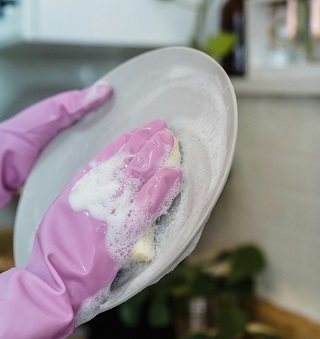
Television advertisements promise a simple miracle: just one drop of dishwashing liquid can dissolve mountains of grease, even in cold water. The message is clear – modern detergents are powerful, efficient, and indispensable in the kitchen.
But this raises an important question many people rarely consider:
If these products can break down stubborn grease so easily, what happens to the tiny residues that may remain on our dishes?
Let’s take a closer look at how dishwashing detergents work, what they contain, and why rinsing dishes thoroughly may matter more than most of us realize.
How Dishwashing Liquids Actually Work
Most dishwashing detergents rely on chemicals known as surfactants (surface-active agents). These molecules have a unique structure: one end binds to water, while the other attaches to oils and grease.
This dual action allows surfactants to:
- Break apart fats and food residues
- Lift particles from surfaces
- Suspend them in water so they can be rinsed away
Without surfactants, removing oily food residues from plates and pans would be much more difficult.
However, the same property that allows these molecules to attach to grease can also allow them to adhere to surfaces, including glass, plastic, and metal.
Why Rinsing Matters
Laboratory testing of cleaning agents often examines how easily a product rinses off dishes. This is typically done by washing a surface, rinsing it multiple times, and measuring how much detergent remains in the final rinse water.
Results sometimes show that small traces of detergent can remain if dishes are not thoroughly rinsed.
In most cases these residues are extremely small, but the principle remains important: proper rinsing reduces exposure.
Simple habits can make a difference:
- Rinse dishes under running water after washing
- Avoid using more detergent than necessary
- Pay extra attention when washing baby bottles or utensils
Clear glass surfaces can sometimes reveal streaks or film if rinsing was insufficient.
The Role of Regulation and Safety Testing
Cleaning products are subject to safety regulations in many countries, though the level of testing varies depending on how a product is classified.
Dishwashing liquids are generally categorized as household cleaning products, rather than cosmetics or food-contact substances. Because of this, regulatory requirements may focus primarily on immediate safety concerns such as:
- Skin irritation
- Acute toxicity
- Proper labeling
Other factors, such as long-term environmental impact or biodegradability, may be evaluated under different regulatory frameworks.
This is why environmental scientists often study how detergent ingredients behave once they enter wastewater systems.
What Happens After Detergents Go Down the Drain?
When dishwashing liquids enter wastewater, their ingredients travel through sewage treatment systems before reaching rivers or other bodies of water.
Surfactants can break down over time, but the speed and completeness of this process depend on:
- The specific chemical structure of the surfactant
- Wastewater treatment conditions
- Environmental temperature and oxygen levels
Because of this, environmental researchers often encourage the development of more biodegradable formulations to reduce long-term ecological impact.
Possible Sensitivities and Health Concerns
For most people, dishwashing liquids are safe when used as directed. However, some individuals may experience sensitivities to certain ingredients, especially with frequent exposure.
Potential issues may include:
- Skin irritation or dryness
- Allergic reactions to fragrances or preservatives
- Respiratory irritation in poorly ventilated spaces
Using gloves while washing dishes can help protect the skin, particularly for those with sensitive hands.
Practical Tips for Safer Dishwashing
You don’t necessarily need to eliminate modern cleaning products from your kitchen. Instead, a few practical habits can reduce unnecessary exposure.
Consider the following:
Use minimal detergent.
A small amount is usually sufficient.
Rinse dishes thoroughly.
Running water helps remove remaining surfactants.
Avoid strong fragrances.
Fragrance-free products may reduce the risk of irritation.
Wear gloves if washing dishes frequently.
Look for biodegradable formulas when possible.
A Balanced Perspective
Dishwashing detergents play a useful role in modern hygiene by helping remove food residues and harmful microbes from kitchen surfaces.
At the same time, it’s reasonable to stay informed about the products we use daily -especially those that come into contact with items we eat from.
Understanding how detergents work, how residues can remain, and how simple habits like proper rinsing can reduce exposure allows us to make more conscious choices in everyday routines.
Sometimes the smallest habits, like rinsing a plate one extra time, can be the simplest way to support both personal health and environmental responsibility.




Leave Your Opinion