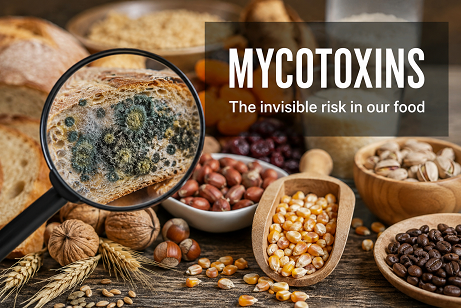
We rarely think about toxins when we buy bread, coffee, nuts or cereals. Yet some everyday foods can contain naturally occurring substances called mycotoxins.
The name sounds alarming, but there is no reason to panic. Mycotoxins are a food-safety issue that is carefully monitored and controlled throughout the food chain.
What are mycotoxins?
Mycotoxins are toxic compounds produced by certain moulds (fungi). They can develop on crops before harvesting or during storage when conditions such as moisture and temperature allow mould to grow.
Importantly, not every mould produces mycotoxins, and the presence of mould does not automatically mean that a food contains dangerous levels of toxins.
Several different mycotoxins exist, but consumers are most likely to encounter discussions about:
- Aflatoxins – commonly associated with cereals, nuts, peanuts and some other crops.
- Ochratoxin A – can occur in cereals, coffee, cocoa, dried fruit and spices.
- Patulin – mainly associated with apples and apple products, particularly when damaged or mouldy fruit is used.
- Fumonisins and deoxynivalenol (DON) – mainly associated with grains such as maize and wheat.
Different toxins are associated with different crops, which is one reason food-safety monitoring looks at the entire supply chain rather than only the finished product.
How can they get into our food?
The journey can begin in the field.
Weather conditions, insects, plant damage and fungal contamination can affect crops before they are harvested. But storage is equally important.
If grains, nuts or other products are stored under warm and humid conditions, mould can grow and some moulds may produce mycotoxins.
This is why proper: harvesting → drying → storage → transportation → processing is so important for food safety.
Can cooking destroy mycotoxins?
This is one of the most important things to understand.
Cooking does not reliably eliminate all mycotoxins.
Some mycotoxins are relatively resistant to heat, meaning that simply baking bread, roasting nuts or brewing coffee cannot be assumed to remove them completely.
This is why food safety cannot depend on what happens in your kitchen alone.
The most important protection happens before the food reaches your kitchen – through agricultural practices, good storage, processing controls and laboratory testing.
So, how do we know our food is safe?
Fortunately, consumers don’t have to test every bag of flour or packet of coffee.
Food manufacturers and regulators establish maximum permitted levels for certain mycotoxins in foods. Producers and laboratories can test raw materials and finished products to ensure that these limits are respected.
Manufacturers also control the conditions that encourage mould growth, including:
- moisture
- temperature
- storage conditions
- damaged or contaminated raw materials
- transportation conditions
When contamination is detected above permitted limits, the affected material should not enter the food supply.
Should you avoid bread, coffee or nuts?
No.
Mycotoxins are a legitimate food-safety concern, but that doesn’t mean ordinary foods are dangerous.
The food industry has extensive controls designed to keep exposure as low as reasonably achievable. In fact, mycotoxin control is a good example of something consumers usually don’t see but that happens behind the scenes every day.
A few sensible habits at home can help too:
- Don’t eat visibly mouldy food.
- Store cereals, flour, nuts and other dry foods in cool, dry conditions.
- Don’t keep products far beyond their recommended storage period.
- Buy food from reputable sources.
- Follow storage instructions on the package.
And don’t assume that removing a visible patch of mould makes the entire food safe. With some foods, fungal contamination can extend beyond what you can see.
The bottom line
Mycotoxins are naturally occurring toxins produced by certain moulds and they can survive normal cooking and processing.
The best protection is not trying to detect invisible toxins at home. Store food properly, don’t ignore obvious mould and buy from reputable sources.

Leave Your Opinion