Most of us think of the digestive system as a simple machine that breaks down food and absorbs nutrients. But inside our intestines lives an entire ecosystem of trillions of microorganisms that work around the clock to keep us healthy.
Collectively known as the gut microbiome (or intestinal microflora), these bacteria, fungi, and other microbes do far more than aid digestion. In fact, many scientists now consider the gut microbiome a “hidden organ” because of its profound influence on nearly every aspect of human health.
Let’s explore why this invisible community is so important—and how your daily food choices help determine whether it thrives or struggles.
More Than Digestion: What Your Gut Microbiome Really Does
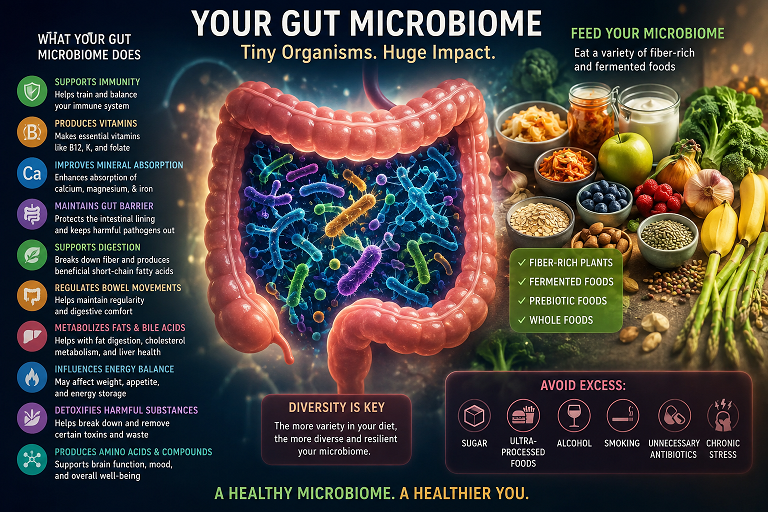
The image above highlights many of the microbiome’s remarkable functions. While modern science has refined our understanding of some of these processes, the overall message is clear:
A healthy gut microbiome supports far more than your digestive system.
1. Supports Your Immune System
Nearly 70% of the body’s immune cells are associated with the gut.
Beneficial bacteria constantly communicate with the immune system, helping it distinguish between harmless substances and genuine threats. A balanced microbiome may help:
- Strengthen immune defenses
- Reduce susceptibility to infections
- Support appropriate inflammatory responses
- Lower the risk of certain autoimmune conditions
When the balance of gut bacteria is disturbed (a condition known as dysbiosis), immune function may also become impaired.
2. Helps Produce Essential Vitamins
Your intestinal bacteria can produce several important vitamins, including:
- Vitamin K
- Biotin (Vitamin B7)
- Folate (Vitamin B9)
- Small amounts of several B vitamins
While these bacterial vitamins don’t replace a healthy diet, they contribute to your body’s overall nutritional status.
3. Improves Mineral Absorption
Healthy gut bacteria may enhance the absorption of important minerals such as:
- Calcium
- Magnesium
- Iron
- Zinc
They do this partly by producing short-chain fatty acids that improve the intestinal environment and help minerals remain more available for absorption.
4. Maintains the Intestinal Barrier
The lining of your intestines acts as a highly selective barrier. It allows nutrients into the bloodstream while preventing harmful bacteria, toxins, and large food particles from passing through. Beneficial microbes help:
- Nourish intestinal cells
- Strengthen the mucus layer
- Maintain tight junctions between cells
- Protect against harmful pathogens
A healthier gut barrier contributes to better overall health.
5. Supports Healthy Digestion
Many dietary fibers cannot be digested by human enzymes. Instead, they become food for beneficial bacteria.
During fermentation, these bacteria produce short-chain fatty acids, including butyrate, acetate, and propionate, which:
- Nourish colon cells
- Support gut health
- Help regulate inflammation
- May improve metabolic health
This is one reason fiber-rich diets are consistently associated with better long-term health.
6. Helps Regulate Bowel Movements
A healthy microbiome supports normal intestinal motility. Balanced gut bacteria help maintain regular bowel movements by influencing:
- Water balance in the colon
- Production of beneficial metabolites
- Communication with intestinal nerves
An unhealthy microbiome has been linked to both constipation and diarrhea.
7. Participates in Fat and Bile Acid Metabolism
The microbiome plays a surprisingly important role in processing dietary fats. Gut bacteria help modify bile acids produced by the liver, influencing:
- Fat digestion
- Cholesterol metabolism
- Energy regulation
- Communication between the gut and liver
Researchers continue to discover how these interactions affect obesity, diabetes, and cardiovascular disease.
8. Influences Energy Balance
Your gut microbes help determine how efficiently energy is extracted from food. Some bacterial communities are better at breaking down complex carbohydrates than others. While this doesn’t mean bacteria alone determine body weight, they may influence:
- Appetite regulation
- Energy harvest
- Fat storage
- Blood sugar control
This is one reason scientists are actively studying the microbiome’s role in obesity.
9. Helps Remove Potentially Harmful Compounds
The microbiome contributes to detoxification by helping process certain:
- Dietary compounds
- Environmental chemicals
- Bile acids
- Metabolic waste products
Although the liver remains the body’s primary detoxification organ, healthy gut bacteria play an important supporting role.
10. Produces Important Amino Acids and Bioactive Compounds
Certain intestinal bacteria participate in the metabolism and production of amino acids and other biologically active molecules. They also produce compounds that influence:
- Brain function
- Mood
- Sleep
- Appetite
- Immune regulation
This has led researchers to describe the gut as our “second brain.”
What Damages the Gut Microbiome?
Modern lifestyles can reduce microbial diversity. Common contributors include:
- Ultra-processed foods
- Low-fiber diets
- Excess sugar
- Frequent antibiotic use (when unnecessary)
- Chronic stress
- Poor sleep
- Smoking
- Excessive alcohol consumption
These factors don’t eliminate beneficial bacteria overnight, but over time they can reduce the diversity that healthy microbiomes depend on.
Feeding Your Gut the Right Way
Fortunately, beneficial bacteria thrive when we provide them with the right foods. Some of the best choices include:
Fiber-rich foods
- Vegetables
- Fruits
- Legumes
- Whole grains
- Nuts
- Seeds
Fermented foods
- Yogurt with live cultures
- Kefir
- Sauerkraut
- Kimchi
- Tempeh
- Miso
Prebiotic foods
These feed beneficial bacteria naturally:
- Garlic
- Onions
- Leeks
- Asparagus
- Bananas
- Chicory root
- Oats
Diversity Matters More Than Perfection
One of the strongest findings in microbiome research is that dietary diversity promotes microbial diversity. Rather than searching for one “superfood,” aim to eat a wide variety of plant foods each week.
Many nutrition experts recommend consuming 30 or more different plant foods weekly to encourage a healthy, diverse microbiome.
The Bottom Line
Your gut microbiome is far more than a collection of bacteria – it is an active partner in digestion, immunity, metabolism, and overall health. Every meal either nourishes this invisible ecosystem or deprives it of the nutrients it needs to thrive.
While genetics certainly influence our health, the foods we choose every day may be one of the most powerful ways to support the trillions of tiny organisms that, in turn, help support us.



Leave Your Opinion