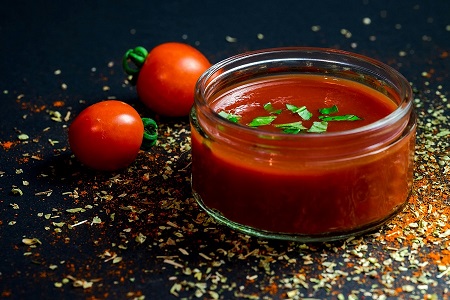
Today, ketchup is one of the most familiar condiments in the world. It sits on restaurant tables, fills supermarket shelves, and is often associated with fast food rather than health. But few people know that ketchup once had a very different identity – it was sold as medicine.
This unusual chapter in food history offers more than a fun fact. It reveals how ideas about nutrition, health claims, food processing, and consumer trust have evolved, and why food quality and safety standards matter more than ever.
Ketchup’s Surprising Medical Origins
In the early 19th century, ketchup was not marketed as a sauce. In the United States, it appeared in pharmacies as a therapeutic product, prescribed for digestive problems, rheumatism, and even hair loss.
The driving force behind this trend was Dr. John Cook Bennett, a physician from Ohio. He promoted tomatoes as a powerful healing food after observing their nutritional properties. At the time, tomatoes were still viewed with suspicion by many consumers, and their health benefits were poorly understood.
Dr. Bennett claimed that tomatoes could treat a wide range of ailments, largely due to their high content of lycopene, a naturally occurring antioxidant responsible for the tomato’s red color.
Lycopene: The Science Behind the Claim
Modern science confirms one interesting detail from this early enthusiasm:
processed tomatoes often contain more bioavailable lycopene than fresh ones.
Heat breaks down tomato cell walls, making lycopene easier for the body to absorb. This is why tomato paste, sauces, and ketchup can deliver higher lycopene concentrations per serving than raw tomatoes.
However, this does not automatically make ketchup a health product.
In the 1830s and 1840s, ketchup was even sold in pill form, concentrated and marketed as a cure. But as nutritional science progressed, researchers realized that while lycopene has benefits, ketchup alone could never function as a medical treatment.
From Medicine to Mass-Market Condiment
By the late 19th and early 20th centuries, ketchup underwent a major transformation. Industrial food production expanded, and manufacturers reformulated ketchup to improve shelf life, taste consistency, and visual appeal.
Sugar, vinegar, salt, and preservatives became standard ingredients. The focus shifted from healing to flavor, stability, and mass consumption.
By the time ketchup became a household staple, its medical reputation had faded, replaced by a new identity as a processed food product designed for convenience and long storage.
What This Story Teaches Us About Food Quality
The ketchup-as-medicine story highlights a critical lesson in food quality and safety:
The presence of a beneficial compound does not make a product healthy by default.
In modern food systems, quality depends on several interconnected factors:
- Ingredient composition
- Degree of processing
- Additives and preservatives
- Nutrient bioavailability
- Portion size and consumption frequency
- Transparency of health claims
While ketchup still contains lycopene, many commercial versions also contain high levels of sugar, sodium, and stabilizers. The nutritional benefit becomes secondary to formulation choices.
Food Safety, Regulation, and Consumer Trust
Unlike the 19th century, today’s food products operate under strict regulatory frameworks. Health claims must be supported by evidence, and active compounds like lycopene are now available as standardized supplements with clear dosage instructions.
This separation between food and medicine is essential for consumer safety.
Food manufacturers are responsible not just for including nutrients, but for ensuring:
- Safe processing methods
- Honest labeling
- Clear communication of benefits and limitations
- Avoidance of misleading health positioning
Why This Still Matters Today
The ketchup story is not unique. Many foods, from cereals to “functional” snacks, are marketed based on isolated nutrients while overlooking overall formulation quality.
Understanding this helps consumers and professionals alike move away from nutrient-based marketing toward evidence-based food evaluation.
In food quality and safety, context matters more than claims.
Final Thought
Ketchup didn’t fail as medicine – science simply evolved. What remains relevant is the reminder that nutrition is not about isolated ingredients, but about formulation, processing, and honest communication.
Food earns trust not through marketing, but through transparency and science.




Leave a Reply