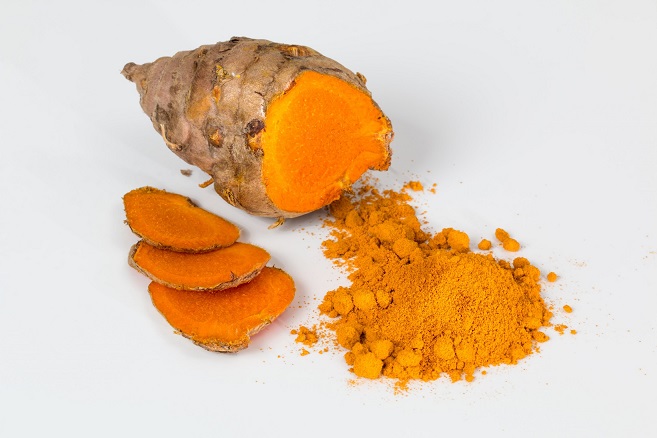
When we see codes like E-100 on food labels, most of us imagine synthetic chemicals that don’t sound appetizing at all. But here’s a surprise: E-100 is not an artificial dye, it’s turmeric! Yes, the same golden spice that has been treasured in Ayurveda and Asian cuisine for centuries.
What Is E-100?
E-100 is a natural food coloring extracted from turmeric root. Its main active compound, curcumin, is what gives turmeric its bright yellow color. Alongside curcumin, there are also dimethoxycurcumin and bis-dimethoxycurcumin – natural polyphenols with antioxidant properties. Depending on processing, turmeric extracts contain between 1-5% curcumin.
Why Turmeric Stands Out Among Natural Colors
Unlike synthetic dyes, turmeric is not just safe, it’s beneficial. Curcumin is widely studied for its anti-inflammatory, antioxidant, and digestive-supporting properties. This makes E-100 unique: it doesn’t just color food, it adds nutritional value too.
Where Is Turmeric (E-100) Used?
Turmeric has countless applications in the food industry, giving dishes a warm golden hue and a touch of exotic flavor:
- Coloring cheese, butter, margarine, and yogurt
- Enhancing mustard, sauces, and liqueurs
- Essential in Indian spice blends, especially curry
- Used in fish and chicken coatings
- Giving appetizing color to rice, potatoes, pasta, and stews
- Even in baked goods and festive treats
- Fun fact: turmeric can be used to naturally dye Easter eggs!
Outside of food, turmeric has even been used as a fabric dye, showing its strong natural coloring power.
Is E-100 Safe?
If you spot E-100 on a product label, you can relax, it’s not a synthetic chemical but turmeric, a natural spice with a long history of safe use. In fact, many researchers suggest it might even be one of the healthiest food colorings available.
Final Thoughts
Food additives often get a bad reputation, but not all of them deserve it. E-100 is proof that some “additives” are simply nature in disguise, in this case, the golden root turmeric, loved not only for its color but also for its health benefits.



Leave Your Opinion